
House Makeover: ASMR Cleaning
Mad1 GamesCasual
4.5385.00 Reviews
- Version
- 4.41
- Installs
- 10.00M
- Age Rating
- Teen
Screenshots


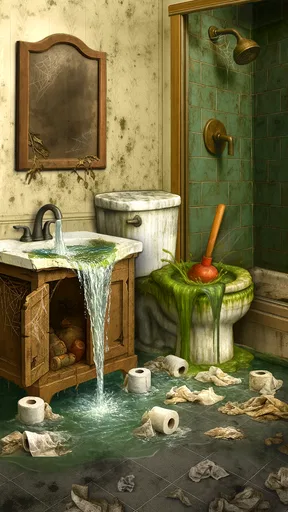
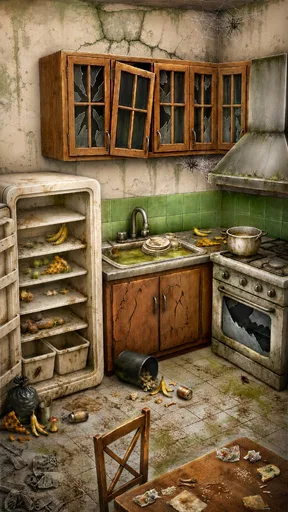
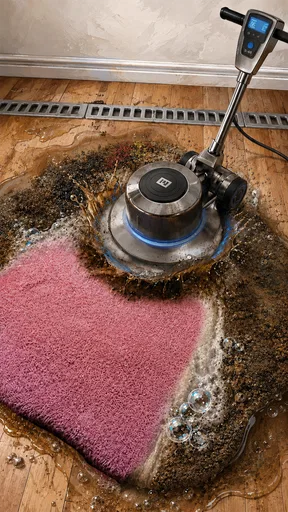
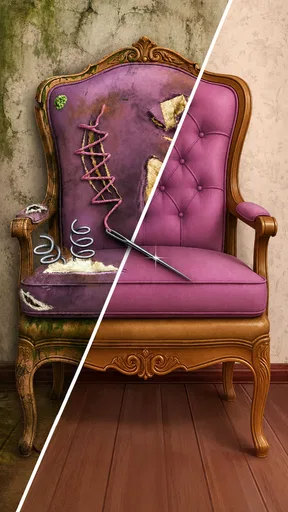

Our Review of House Makeover: ASMR Cleaning
 Analysis by Appyee
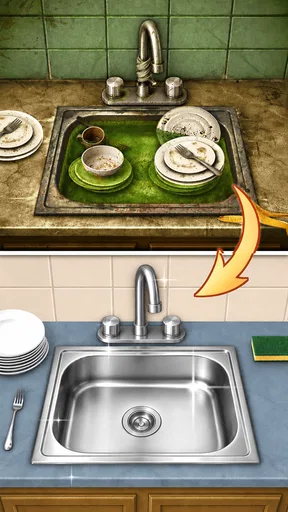
I spent my first sessions with House Makeover: ASMR Cleaning expecting a simple way to pass a few spare minutes, and that is exactly where it makes its strongest first impression. It turns untidy rooms and neglected household objects into small cleaning and repair tasks, giving each one a clear before-and-after payoff. The appeal is immediate: choose a messy area, work through the visible problems, and watch the space become presentable again.
That basic loop places it firmly in the casual game space, but it is more useful to think of it as a relaxation-focused makeover game than as a traditional challenge title. I do not open it for a demanding story, deep strategy, or competitive play. I open it when I want something visually clear, easy to understand, and light enough to play without preparing myself for a serious commitment.
Why the first week feels so satisfying
The opening appeal comes from the way each task gives me a visible job. A dirty or damaged part of a house creates an obvious question: what needs to be cleaned, fixed, or improved first? That makes the game approachable even when I am tired. There is no need to learn a complicated control scheme before getting started, and the house setting gives the actions a familiar context.
I also like the psychological rhythm of the work. A messy surface invites attention, a repair makes the object usable again, and the finished space provides a small sense of completion. This is not the same satisfaction as solving a difficult puzzle. It is closer to organizing a drawer, wiping down a kitchen counter, or finally dealing with a neglected corner at home. The game turns those everyday instincts into a short, controlled activity.
That makes it especially suitable for brief breaks. I can play while waiting for an appointment, during a commute when I am seated, or at the end of the day when a more demanding game would feel like work. The Teen content rating is worth noticing for families choosing games for younger players; it is not presented as a preschool activity, so parents should still check whether its tone and tasks fit the player.
During the first week, the strongest feature is not complexity but clarity. I rarely need to wonder what the immediate goal is. The visual condition of a room or item communicates the problem before I have invested much time. That quick readability is important on a phone, where small controls and busy interfaces can otherwise make casual games frustrating.
There is also a useful emotional difference between this and a standard match-three game. Match-three titles usually ask me to chase combinations, manage moves, or pursue a score. Here, the reward comes from restoring an environment. If I prefer tidy spaces, visible progress, and a calmer pace, that change in emphasis is meaningful. If I need constant surprise or a strong sense of mastery, the first-week charm may disappear sooner.
How I would use it in an ordinary day
My most realistic use case is a short evening session after finishing chores. I may not have the energy to begin another television episode or a longer game, but I can spend a few minutes improving one virtual room. The important distinction is that the game does not ask me to keep a large mental plan in my head. I can stop after a small task and return later without feeling that I have abandoned a complicated strategy.
It also works as a transition activity. Playing for a little while before bed or between larger tasks can provide a gentle change of focus. I would not call it a substitute for rest, and anyone who finds screen-based relaxation stimulating rather than calming may prefer a non-game activity. Still, the house-cleaning theme gives the sessions a more grounded feeling than many endlessly scrolling casual games.
What keeps it useful after the novelty
The more difficult question is whether the makeover loop has enough staying power after the first attractive transformations. In my experience, the answer depends heavily on what I want from a mobile game. The title can remain useful as a low-pressure habit, but it is less convincing as a long-term main game for someone who expects constant mechanical growth.
Its recurring value comes from the ease of returning. I do not need to remember a complicated build, a long quest chain, or a detailed set of objectives. That makes it a good choice for irregular players who may open a game only a few times each week. A session can feel complete on its own, which is a genuine advantage over games that punish interruptions or demand daily attention.
For a player who enjoys completion, the attraction may last longer because each unfinished area acts as a small invitation to continue. The makeover theme also gives progress a coherent direction: the point is not simply to collect abstract rewards, but to improve the condition of a home. That context helps the actions feel connected even when the individual tasks are simple.
However, I would not confuse easy re-entry with deep variety. Repeating cleaning and repair actions can become predictable once I understand the basic rhythm. The game’s lasting value therefore depends on whether I enjoy the mood and visual progress more than mechanical novelty. Players who need increasingly difficult levels, elaborate customization, or a strong narrative arc should approach it as a light side game rather than a permanent centerpiece.
A practical way to avoid playing on autopilot
I found it more enjoyable when I treated each session as a small project instead of rushing through every available task. Focusing on one room or one type of improvement makes the before-and-after change easier to appreciate. This is a simple habit, but it prevents the game from turning into a repetitive tap-through routine.
Another useful approach is to play when I genuinely want a calming activity, not whenever I am automatically reaching for my phone. If I open it out of habit several times a day, the simple loop can lose its pleasant character. Used selectively, the game benefits from its short, tidy sessions; used constantly, the same simplicity can expose its limits.
The free entry also lowers the risk of trying it as a secondary game. It costs nothing to start, while optional purchases range from ninety-nine cents to four dollars and ninety-nine cents per item. I would keep spending strictly optional and decide in advance whether a purchase adds enough enjoyment to justify it. Casual makeover games can encourage impulse spending when progress feels soothing, so a clear personal limit is sensible.
Where the maintenance burden appears
The game is easy to understand, but that does not mean it is entirely frictionless. The main maintenance burden is attention. Because the core actions are straightforward, the player must supply some of the long-term motivation. There is no guarantee that a new room or object will feel meaningfully different from the previous one, so I have to notice the visual progress rather than rely on increasingly complex systems to keep me engaged.
That is not a technical complaint as much as a design trade-off. Simplicity is what makes the game comfortable during a short break, but simplicity also means there are fewer layers to return to when the basic satisfaction fades. A player who likes managing resources, planning upgrades, or optimizing outcomes may find the experience too hands-off.
There is a second kind of maintenance: managing expectations. The store summary describes helping to clean and fix everything in a house, which sets up a broad fantasy of restoration. In practice, I would approach it as a sequence of casual makeover activities rather than a detailed home-design simulator. That distinction matters. Someone looking for realistic renovation planning, architectural control, or a large decorating toolkit may be happier with a dedicated design game.
The current version is 4.41, and the game supports devices running Android 7.0 or later. Those details make it accessible to many older Android users, although practical performance can still vary by device. I would leave enough free space for the game and keep the operating system reasonably current, but I would not choose it solely because of compatibility. The real decision is whether its gentle loop suits the way I play.
Mad1 Games has positioned the title for a broad casual audience, and its reach is substantial: it has passed ten million installs. That level of adoption suggests the basic concept is easy for many people to pick up, but popularity does not settle the question of personal fit. A widely downloaded game can still feel repetitive to a player who wants depth, and a simple game can still be exactly right for someone seeking a quiet routine.
What causes fatigue over time
The largest source of fatigue is repetition without enough personal investment. Cleaning is satisfying when the result feels fresh, but the emotional payoff weakens if every task begins to feel like the same gesture applied to a different surface. I noticed that the game is strongest when I let the transformation itself be the reward. Once I started judging it by the depth of its mechanics, it became less compelling.
Another possible fatigue point is the lack of pressure. At first, the relaxed pace is a benefit because it removes stress. After several sessions, though, some players may want a stronger reason to continue. Without a demanding objective, a competitive layer, or a more involved planning system, the game can become something I open only when I want background entertainment.
That makes it a poor match for players who enjoy failure, experimentation, and high-stakes decisions. It is also not the best choice for someone seeking a social game to play with friends. Its appeal is personal and self-contained: I improve a space, enjoy the visual result, and move on. If the fun for you comes from comparing scores or coordinating with other people, another casual genre will probably serve you better.
There is a smaller but important issue with the makeover fantasy itself. A house can suggest creativity, but cleaning and fixing are not automatically the same as designing. If I want to choose every color, layout, and decorative detail, I would look for a home-design alternative with more control. If I want a puzzle alternative, I would choose a game built around deliberate problem solving. This title sits between those categories, favoring accessible restoration over either deep decoration or demanding puzzles.
The optional purchases can also affect how some people experience the loop. Even when the free version is enough to try, the presence of purchasable items may make a player more conscious of progression and convenience. My advice is to play naturally for a while before spending anything. If the basic cleaning and repair cycle already feels repetitive, buying an item will not fix the underlying mismatch.
Who should make room for it
I would recommend it to players who enjoy orderly visual transformations, short sessions, and games that do not require constant concentration. It is a particularly good fit for someone who likes the emotional payoff of tidying but wants that experience in a playful form. It can also suit families evaluating a casual game for a Teen-rated audience, provided the rating matches their own standards.
I would be more cautious about recommending it to dedicated simulation fans. The house theme may initially suggest detailed renovation, but the experience is better understood as accessible casual entertainment. Likewise, competitive players, story-focused players, and people who need a steady increase in difficulty may run out of reasons to return sooner than expected.
The average rating is 4.5 from around forty-five thousand ratings, with roughly three hundred eighty-five written reviews. I read that as a sign of strong general appeal, not as proof that every player will find lasting depth. Ratings are useful for confirming that the concept works for a large audience, while the actual design priorities tell me whether it belongs on my phone for weeks rather than days.
My long-term verdict
After the first-week glow fades, House Makeover: ASMR Cleaning earns lasting space only if I value calm repetition and visible restoration more than expanding complexity. Its best quality is dependable accessibility. I can pick it up without preparation, understand the immediate task, and leave with a small sense of completion. That is a modest goal, but the game meets it well.
I would keep it installed as a break-time game rather than make it my main mobile hobby. The free price makes that decision easy, and the broad device support helps more people try it. I would also keep purchases optional, especially because spending cannot turn a deliberately simple loop into a deep simulation.
My final recommendation is therefore conditional but positive. Choose it if you want a tidy, low-pressure house makeover experience that fits around real life. Skip it if you need strategic depth, social competition, realistic decorating control, or constant new challenges. For the right player, the maintenance is not about managing a complicated game; it is about returning occasionally before the soothing routine becomes automatic. That balance is what determines whether this casual title remains useful after its initial novelty has disappeared.
Verdict
Strengths of House Makeover: ASMR Cleaning
- Relaxing ASMR sounds make routine cleaning feel satisfying.
- Simple controls are easy for casual players of all ages.
- Short tasks suit quick gaming sessions.
- Room transformations provide clear visual progress.
- Offline play makes it convenient during travel or downtime.
Limitations of House Makeover: ASMR Cleaning
- Gameplay can become repetitive after several makeover levels.
- Some upgrades or items may require watching ads.
- Limited challenge may not appeal to experienced puzzle players.
- Progress can feel slow without optional in-app purchases.
- The game may use considerable storage for its visual content.
Other Releases by Mad1 Games
View All
Stress Crusher Relaxing Games
Casual4.3
Similar Picks in This Category
View All
My Talking Angela
Outfit7 Limited4.2

My Talking Tom
Outfit7 Limited4.3

Pou
Zakeh4.2

My Talking Tom 2: Pet Game
Outfit7 Limited4.3

Candy Crush Saga
King4.6

Bridge Race
Supersonic Studios LTD4.1
Frequently Asked Questions
What is House Makeover: ASMR Cleaning?
House Makeover: ASMR Cleaning is a casual home-renovation game that combines satisfying cleaning activities with decorating and makeover challenges. You typically restore messy or neglected rooms by removing dirt, repairing damaged areas, organizing objects, and choosing new furniture or decorations. Its relaxing presentation and ASMR-style cleaning sounds make it suitable for players who enjoy simple, low-pressure gameplay rather than complex strategy.
How does the gameplay work in House Makeover: ASMR Cleaning?
The game generally guides you through a series of household tasks, such as wiping surfaces, vacuuming, scrubbing stains, collecting rubbish, fixing broken items, and arranging rooms. After completing the cleaning stage, you can improve the space with cosmetic changes and decorations. Controls are designed for touchscreens, so most actions involve tapping, swiping, or following on-screen prompts. Progress is usually divided into individual rooms or makeover projects.
Is House Makeover: ASMR Cleaning free to download and play?
House Makeover: ASMR Cleaning can usually be downloaded without an upfront purchase, but the free version may include advertisements, optional rewards, or in-app purchases. Ads can sometimes appear between levels or when you request bonus resources, while purchases may help unlock items or speed up progress. Before downloading, check the current store listing for the exact pricing, advertising policy, and available purchase options on your Android or iOS device.
Does House Makeover: ASMR Cleaning require an internet connection?
Some parts of House Makeover: ASMR Cleaning may work without a constant internet connection, especially basic cleaning and decorating levels that have already been downloaded. However, an internet connection may be needed for advertisements, optional rewards, cloud features, updates, or newly added content. Offline availability can also vary between versions and devices, so it is best to test the game after installation rather than assuming every feature will function without Wi-Fi or mobile data.
Is House Makeover: ASMR Cleaning suitable for children?
The game offers simple mechanics, colorful visuals, and non-violent home-improvement content, which may make it appealing to younger players. Nevertheless, parents should review the age rating and privacy information before installation, particularly because free mobile games can contain advertisements or optional in-app purchases. If children are playing, parental controls are recommended to prevent accidental purchases and to limit exposure to unsuitable third-party advertising or external links.
Play our best games!


